Congress is moving toward a vote on legislation that would reshape college athletics, and HBCUs are not on the sidelines. The Protect College Sports Act has drawn formal support from the Southwestern Athletic Conference and a public endorsement from the president of Texas Southern University. It has also drawn a pause request from the Congressional Black Caucus and outright opposition from the largest athlete advocacy organization in college sports.
What the Bill Would Do
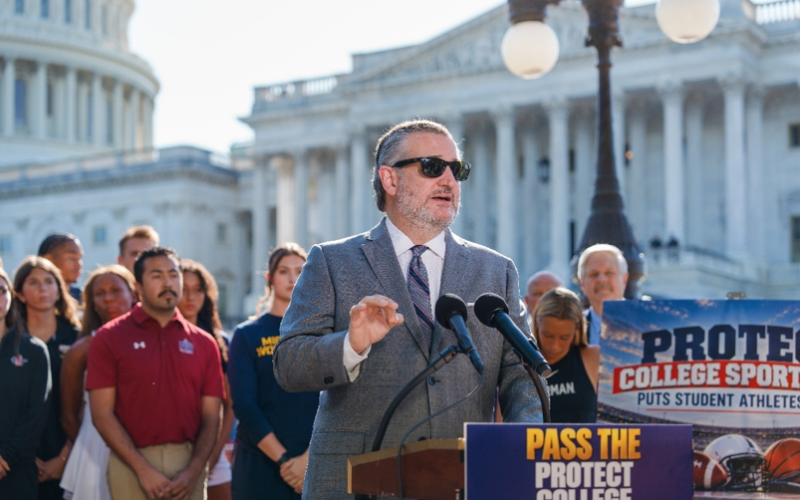
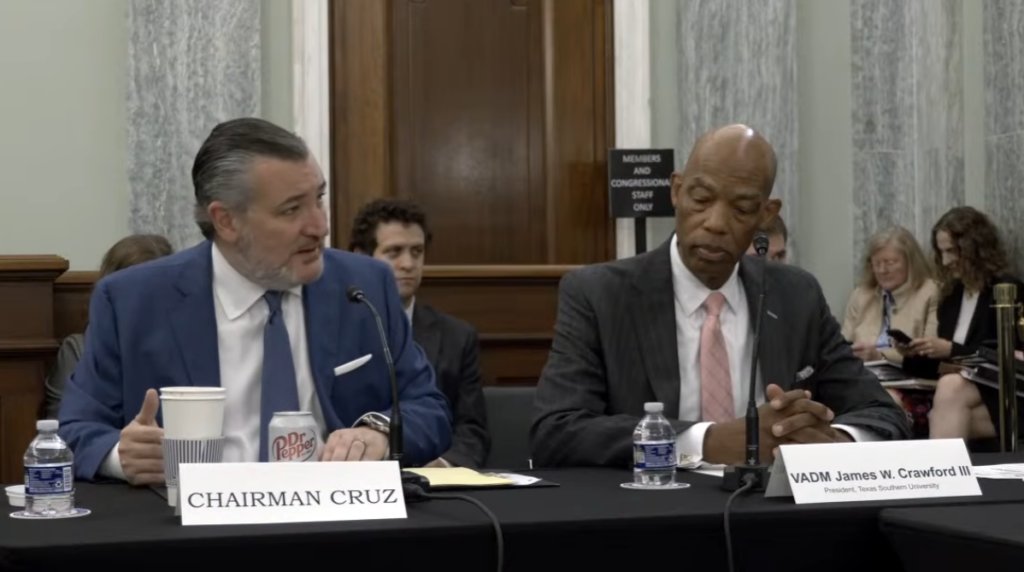
The Protect College Sports Act, co-authored by Senate Commerce Committee Chairman Ted Cruz (R-Texas) and Ranking Member Maria Cantwell (D-Wash.), would establish a national framework for athlete transfers, name, image and likeness compensation, eligibility rules, and revenue sharing. On June 11, Cruz, Cantwell and Sen. Chris Coons (D-Del.) hosted a roundtable with coaches, student athletes and university presidents to build the case for it. Cruz wants both chambers to vote before the fall athletics season begins. HBCU leaders were among the most direct about what is at stake.
The HBCU Argument for Guardrails
James W. Crawford III, president of Texas Southern University, was at the June 11 roundtable and made the case in terms specific to what the current environment costs a school like his. “If you get at the ability where you have some controls on costs, you don’t have this continual bidding, you’re not in a constant recruiting mode because now you’re constantly trying to recruit that great player that just beat your team,” Crawford said. “Controlling that ‘Hunger Games’ aspect, economically, would be very beneficial to historically Black colleges and universities, as well as other institutions that are mid-size regional institutions.”
TSU’s 2024-25 financial data shows exactly what he means. Texas Southern runs a $10.56 million athletics budget across 16 sports and 347 athletes. Of that, $4.87 million, nearly half, comes from direct university-wide support. What the program earns on its own through tickets, sponsorships and media totals $1.75 million, about 17 cents of every dollar spent. Football spent $3.06 million in 2024 and generated $90,539 in revenue. That nearly $3 million gap gets absorbed by the same fund covering track, baseball, soccer and eight other sports.
TSU holds a $111.2 million endowment, up from $97.4 million the prior year, but none of those funds flow to athletics. The athletic budget runs almost entirely on university-wide support and student athletic fees, which means it moves with enrollment. When enrollment shifts, so does the money available to keep 16 sports running. Across the program, 435 student-athletes compete, with women making up 40.9% of that total.
Crawford’s broader point is about where the pressure is coming from. The “Hunger Games” environment he describes is not competition between TSU and its SWAC peers. It is being driven by Power Four programs like the University of Texas, Texas A&M and the University of Houston, schools whose media contracts, donor bases and TV revenue operate in an entirely different financial universe. When those programs raise the floor on what it costs to recruit and retain players, every school below them has to respond or fall further behind. For TSU and similarly resourced Division I schools across the country, that response comes out of the same university budget that funds everything else. “What this bill does is enable schools like Texas Southern University to plan, to project, to support the athlete,” Crawford said. Cruz amplified it, warning that inaction would be “devastating” for HBCUs and for hundreds of thousands of athletes whose college opportunities run through programs like these. “That is pressing and urgent, and I think failure is not an option,” Cruz said.
TSU is not alone in making that argument. The SWAC put it in writing on behalf of the entire conference. Commissioner Charles McClelland sent a letter of support to Congress on June 10, backing the bill as “a bipartisan effort to establish a national framework and bring much needed legal stability to college athletics” and praising it for codifying “essential student-athlete health, wellness, and academic support into law.” McClelland did flag two areas where he believes the bill falls short: barriers that limit student-athlete participation in revenue sharing, and the bill’s silence on employee classification, which he called “an issue the HBCU community has consistently raised” and one the SWAC views as critical to address.
The same concern about competitive stability is coming from mid-major conferences beyond the HBCU world. Sherika A. Montgomery, commissioner of the Big South Conference, told the roundtable that the gap has been widening under the current rules. “The patchwork of state laws, just in those three states, there has been a level of instability from that perspective as our coaches recruit not only against themselves in our conference, but across other coaches in those respective states,” Montgomery said. The Big South has 4,300 student athletes across nine institutions in North Carolina, South Carolina and Virginia. Montgomery said the bill is “definitely a step in the right direction to bring that much needed stability in college athletics.”
The CBC Isn’t Ready
That HBCU and mid-major backing has not moved the Congressional Black Caucus. The caucus is not opposing the bill, but it is not prepared to back it either. On June 3, the CBC sent a letter to Cruz and Cantwell calling for a pause in the bill’s advancement until college athletics leadership engages on a separate but related concern: what the caucus describes as ongoing attacks on Black political representation.
The CBC has demanded responses from SEC Commissioner Greg Sankey, ACC Commissioner James Phillips and NCAA President Charlie Baker on redistricting efforts it says are reducing Black voting power in the South. Its position is that Congress should not be extending new legal protections to institutions whose leadership has stayed silent on those efforts. “Until college athletics leadership demonstrates a willingness to both engage on these issues and take concrete action in support of the communities that have contributed so much to their success, Congress should refrain from advancing legislation that would provide additional protections, authorities, benefits, or legal certainty to these institutions,” the letter states.
The CBC also made clear that even if athletics leaders respond, policy concerns remain: questions of accountability, athlete protections and the bill’s broader impact on student athletes. A spokesperson confirmed the June 3 letter remains the group’s current position. The CBC helped stall the competing SCORE Act in the House in May on the same grounds. Its 58 House members and four senators represent a meaningful block of votes any bill would need.
Athletes Say the Bill Gets It Wrong
Where the CBC has set conditions, Athletes.org has drawn a harder line. The group, which describes itself as “the players association for college sports,” came out against the bill on May 28. Its objection is not about timing or related political conditions. It is about the structure of the bill itself. Athletes.org argues the legislation would grant the NCAA and member institutions an antitrust exemption, locking in restrictions on athlete compensation, transfers and eligibility while leaving athletes with no meaningful role in setting those rules.
“AO’s position is simple: rules governing athlete compensation, transfers, eligibility and working conditions should be negotiated by athletes, not imposed on them through legislation,” the organization stated. “Real stability comes through representation, negotiation and enforceable standards, not one-sided restrictions protected by Congress.”
Athletes.org counts more than 5,200 current and former college athletes as members and has opposed both this bill and the SCORE Act. The group’s argument is that handing the NCAA a permanent antitrust exemption through Congress would give federally protected force to the same restrictions courts had already ruled illegal, without giving athletes any seat at the table where those rules get written.
Where Things Stand
Two separate objections, one about conditions and one about the bill’s foundation, are now the most immediate obstacles to passage. A Senate Commerce Committee markup is expected. Cruz has pushed for a floor vote before fall athletics seasons begin. Whether the CBC can be brought along before that point is the most pressing variable. The caucus has not closed the door, but college athletics leadership has not yet met its conditions.
For HBCUs, the stakes on both sides are real. The financial data from programs like Texas Southern makes the case that some version of federal structure is better than the current one. The CBC’s conditions and the athlete community’s opposition are the two things standing between that argument and a bill that could actually become law.